Showing posts with label reading. Show all posts

Friday, January 06, 2012

My Year in Reading: 2011

Since I didn't finish the book I’m reading last weekend, I have read 21 books in 2011. Not a bad count considering the pace at which I read.
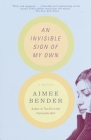
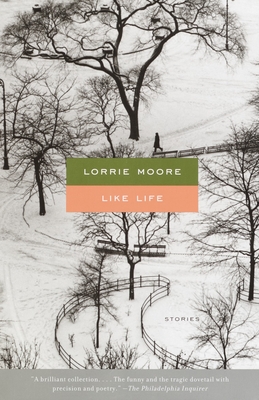
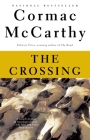
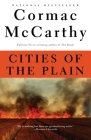
Looking back over the year, I am amazed at the number of forgettable books I read. Maybe it’s because I didn’t immediately sit down and record my impression of every book, or just because the book left no impression, but there are a number books of which I cannot even remember the plot. Aimee Bender’s An Invisible Sign of My Own and Lorrie Moore’s Like Life both fall into this category. I would have expected to like and find inspiration in both, yet nothing remains. Then there are the pairs of books I read by William Faulkner (Sanctuary and Absalom Absalom!) and Cormac McCarthy (The Crossing and Cities of the Plain). I don’t doubt the quality of any of these novels, but over time the stories conflate and each pair becomes a muddle.
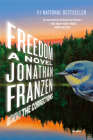
The books I read in 2011 are more notable for the disappointments, led in sequence and importance by Jonathan Franzen’s Freedom. The book was so highly lauded, and I was already a fan of The Corrections, so how was I not to like this book? The lack of a coherent arc to the novel is really what did it in. It can be as smart, clever, incisive, clairvoyant as possible and still fall down as a book if you can’t convince me that I need to read the next page.
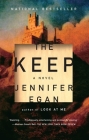
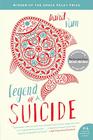
But Freedom wasn’t the only let down. Add to it Jennifer Egan’s The Keep (reminiscent of Stephen King, but too childish and novel for its own good), David Vann’s Legend of a Suicide (retelling the same story in different ways and with different facts isn’t exploration--it’s confusion), and Richard Yates’s Disturbing the Peace (like John Cheever at his most matter of fact and least insightful).
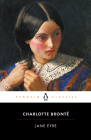
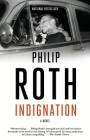
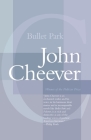
And then there were the surprises. Jane Eyre proved to be much better than expected. Zadie Smith’s White Teeth proved to me that a book can be a dramatically different setting and culture than my own (and even my own interests) and still be a fantastic book to read. Indignation proved that, despite the failings of Everyman and The Humbling, and other recent novels, Philip Roth still has it in him to write a great novel. And John Cheever’s Bullet Park, thought it was as dull at times as Cheever can be, showed the impact of a sudden, simple action and the well-laid phrase. It has the best final paragraph that I have ever seen.
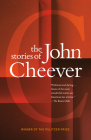
The best books I may have read this year were two short story collections that didn’t surprise as a whole form. The Stories ofJohn Cheever and What We Talk AboutWhen We Talk About Love by Raymond Carver both revealed everything we think of as typical of each author. Some stories come out as caricature, like people trying to write the Cheever or Carver story. At the same time, there are stories in each that prove the author to be the master we expect.
Despite the masters on the list, it was an unremarkable year of reading. It does inspire a couple of new year’s resolutions. First, to find better books to read in the new year. And the second, to write down at least some thing about each book I read. It’s the least I can do.
The full list:
Freedom- Jonathan Franzen
Like Life - Lorrie Moore
Zombie - Joyce Carol Oates
White Teeth - Zadie Smith
Sanctuary - William Faulkner
Bullet Park - John Cheever
An Invisible Sign of My Own - Aimee Bender
The Keep - Jennifer Egan
The Crossing - Cormac McCarthy
Disturbing the Peace - Richard Yates
Legend of a Suicide - David Vann
Black Water - Joyce Carol Oates
Indignation - Philip Roth
Dusk - James Salter
Absalom Absalom! - William Faulkner
Disturbing the Peace - Richard Yates
Jane Eyre - Charlotte Bronte
Stories - John Cheever
Cities of the Plain - Cormac McCarthy
Women With Men - Richard Ford
What We Talk About When We Talk About Love - Raymond Carver
Cold Spring Harbor - Richard Yates

Tuesday, January 03, 2012

The Usual Year-End Thing


I suppose the year’s end requires some sort of reflection. There can be value in looking back, but it seems like we look back for things to regret, mistakes made, things we’d like to do better in the coming year. This doesn't seem to me like a fruitful exercise.

I know that there is a long list of failures, objectives unfulfilled. But if I’ve learned anything in the last year, it is not to set my sights too high. Trying to achieve too much is bound to lead to failure. Overachiever or not, my expectations for myself need to be reasonable.

In thinking about the new year, and resolutions for it, I know that I need to de-task. I need to get some things off my to-do list. And not by getting them done. By never putting them there in the first place. Starting with the stacks of unread magazines. I will not be renewing any magazine subscriptions in 2012. Sorry New Yorker. Sorry BusinessWeek and Harvard Business Review. My backlog is enough to carry me a year or more without a new edition appearing in my mailbox.

Another objective must be to focus. At any given time I have many projects in the works. I make plans to do this little bit on this project, another little bit of another, filling my spare hours with this variety of tasks with completion expected by the end of the week. This might just be unreasonable. It just leaves me with a long list of partially finished or unfinished and neglected objectives. Pick the next important thing on the list of things to do (let’s keep calling them objectives) and see it through until it’s done. I am more productive when I’m allowed to obsess over one thing instead of multitasking.

This, though, applies to everything but writing. I have found that I work better in short bursts. If I sit down, writing a first draft, for much longer than an hour, I find I begin rushing to the next sign post, the next major event. When I work for short periods, I am allowed to keep my creativity focused on what is before me. In an extended period, I start trying to look further down the road, and rush to get there.

Without the looking back and beating myself up, I’ve managed to make some resolutions. Now to stick to them--and not beat myself up if I don’t.

Sunday, November 13, 2011

The Meaning of My Library

I have never counted the books in my personal library. Indeed, the total figure grew within the last few weeks after the library's book sale. I'm nervous, though, that the number of unread outnumber the read.

Maybe this isn't all bad. If I had read them all, where would be the fun of browsing my library for the next book to read? An argument could be made for disposing of all books already read. Save those one might want to return to for reference.

A personal library, though, is so much more than a grouping of books either read or unread. The books are there to tell the observer something about the library's owner. Even if that observer is the owner. I don't get many observers down to my basement office where most of my library is confined, but I still enjoy looking over my books. The various titles, the colored spines, remind me not only of the stories within, but also of the person I was at the time. Various bits of my collection remind me of who I was an who I think I am.

Not my library. You can tell by the Ken Follett and the Janet Evanovich.
To see on my shelf Updike's The Afterlife, I remember the day of waiting for jury duty. To see Celine's Journey to the End of the Night, I'm reminded of two distinct points in my life when I read the novel. The first time makes me recall an early morning after a late night, drinking coffee downtown watching the business world start up its day.  The second time, I was well ensconced in that business world. Or McCarthy's No Country for Old Men, devoured while laying on the couch of my current home.

When visiting someone's house, I am drawn to the books on their shelves. Yes, I am judging them by what they've chosen to put on display. The books there are meant to be a representation of the owner. And if there is a disregard for which books are on the shelves for public display, that tells me something (disappointing) too.

In an article, "Shelf Life", in last week's New Yorker, James Wood explores the meaning and meaninglessness of our libraries. He sums up the sentiment thus:

Libraries are always paradoxical: they are as personal as the collector, and at the same time are an ideal statement of knowledge that is impersonal, because it is universal, abstract, and so much larger than an individual life.

The books on my shelf mean something to me not only because they represent me to myself, but because they represent me to the observer as well. And as personal as the identity that is created can be, it is in the universal that it finds meaning. But, as Wood asks,"Isn't a private library simply a universal legacy pretending to be an individual one?"

A library is a showcase and I've known more than one person who has used bookshelves to demonstrate superiority. Some would likely say I'm guilty of the same. The trashy novels are relegated to a bookshelf in the guest room.

Where, though, does this universality go when all of these titles are contained in a small piece of electronic hardware? Do I care about the representation they form? I would say they mean significantly less.

When books are commoditized, stripped of their physical presence, their abstract value is reduced. They have no presence. They are experiential only. We have the pleasure of reading and the meaning found in the words, but those e-ink letters don't represent me in the same way a book, those same words on paper and bound between covers, does. The electronic list of titles, browsed with a push of a button, does not please me, does not force recall of memories and desire, as much as does a simple glance at my shelves.

The materialism of it is something that probably gives many book owners/collectors worry. There are many books on my shelves that I will never open again. But still they are there to tell me something. They are there, though, to give me pleasure, to help me recall the stories within and the stories of my own life when I read the book. And it real is this pleasure that matters. It is this pleasure that gives my library meaning.

Monday, April 25, 2011

Goon Squad Wins Pulitzer

Last week, Jennifer Egan won the 2011 fiction Pulitzer for A Visit from the Goon Squad. Does this mean I should quit bad-mouthing her second novel Look at Me? Seriously, I didn't like it. But she has received quite a lot of praise for her novel The Keep as well as Goon Squad. The Keep is in my reading queue currently (actually, the audiobook is my exercising MP3 player, but it isn't getting a lot of use these days). So, I'd better add another one to my list.

I will definitely have to read Goon Squad, but it got me thinking about what other Pulitzer winners I have yet to read. Below is the list of fiction winners since 1990--the ones in bold I have actually read:

2010 - The Tinkers by Paul Harding
2009 - Olive Kitteridge by Elizabeth Strout
2008 - The Brief Wondrous Life of Oscar Wao - Junot Diaz
2007 - The Road by Cormac McCarthy
2006 - March by Geraldine Brooks
2005 - Gilead by Marilynne Robinson
2004 - The Known World by Edward P. Jones
2003 - Middlesex by Jeffrey Eugenides
2002 - Empire Falls by Richard Russo
2001 - The Amazing Adventures of Kavalier & Clay by Michael Chabon
2000 - Interpreter of Maladies by Jhumpa Lahiri
1999 - The Hours by Michael Cunningham
1998 - American Pastoral by Philip Roth
1997 - Martin Dressler: The Tale of an American Dreamer by Steven Millhauser
1996 - Independence Day by Richard Ford
1995 - The Stone Diaries by Carol Shields
1994 - The Shipping News by E. Annie Proulx
1993 - A Good Scent from a Strange Mountain by Robert Olen Butler
1992 - A Thousand Acres by Jane Smiley
1991 - Rabbit At Rest by John Updike
1990 - The Mambo Kings Play Songs of Love by Oscar Hijuelos

Just six in the last twenty years. I'd better get reading.

Thursday, February 10, 2011

Wanting to Read David Vann's Caribou Island


It seems rare anymore that I can here an interview with an author and read a review of his book and know then that I really want to read the book. This has happened with David Vann's Caribou Island.

I heard Michael Silverblatt's interview with Vann and was extremely interested. And then the reviews kept coming. I even sat down in my local Tattered Cover and read the first chapter just last week.

The story centers on a man who is obsessed on building a house on an island in already-remote-enough Alaska. From the wife's persepctive, the novel deals with dark subject matter--one of its appeals for me--including suicide. The pain and frustration that exists in the story, the desires and obsessions, and the let-downs, all served to make my very interested in the novel.

My reading list, though, is long. And it feels like a shame to cheat on all the unread books on my shelves to bypass them and go out and buy and then read something brand new. What about all of those classics I still need to read? The recent award winners? The Franzen novel I'm trying to get through now? So many things around me are begging to be read, but it won't stop me from pushing, here, a book that sounds to me worth the time--despite everything else in the queue.

Just some of the reviews of Vann's Caribou Island:
LA Times - "Darkness and loneliness in Alaska, woven into a compulsively readable story."
Telegraph UK - "Caribou Island is as bleak as the shoreline of the brooding Skilak Lake"
Guardian UK - "at his best, Vann is a forceful, potent writer"
SF Gate - "gives us a climax as haunting and realized as any in recent fiction."
NY Times - "gets to places other novels can’t touch."
Seattle Times - "won't do much for Alaska tourism."
New Yorker - "The harsh beauty of Alaska is the star turn in Vann's disturbing novel."

And the excerpt you really should read: Browse Inside Caribou Island: A Novel

Tuesday, June 22, 2010

Lower E-Reader Prices Make Them More Tempting

I've said this before: I'm a book guy. Good old fashioned paper books, complete with the smell, the weight, the feel. Yet, as the prices for e-readers like the Nook and the Kindle come down to earth, I find them tempting. It's not that I want to toss away my library and clear my bookshelves for knick-knacks, but I like the idea of a library in a slim piece of electronic gadgetry.

I don't think of books as consumables. I don't read books and then dismiss them. I like knowing they still exist on my shelf (in a tangible, physical form) for me to reference. I know that if I want to go back to a particular story in Denis Johnson's Jesus' Son, the book is there. E-readers are good for folks who might read a book once and be done with it, but I'm beginning to think that they might be good for reference too. Might not be bad, when I'm sitting down to write several pages tonight, to pull out a Kindle and reread "Car Crash While Hitchhiking." And I think they might be very good for non-fiction, for the important books that come out in hardback and make a stir but you don't necessarily need them on your bookshelf for all of eternity (I still need to get around to Nassim Taleb's Black Swan).

And what about magazines? I am definitely a magazine reader, thought I rarely seem to get through them. Wouldn't an e-reader be the best place for The New Yorker or Business Week?

So, I'm tempted.

I did put my hands on a Nook a couple of weeks ago, and I wasn't impressed. It felt clunky and the model on display at the store was stuck loading a page. The sales person had to power it off and back on to get it working again.

But then I wonder if I would be doing damage to two industries I'm fond of, publishing and bookselling. I'd rather not aid in the demise of either.

I'm not convinced that I'm buying one of these things yet, but with more reasonable pricing it is worth considering.

Sunday, November 08, 2009

Summer Reading Book Reviews to Come

As crazy as things have been over the summer and this fall, I have managed to read a slew of books. And I promise that reviews--as brief as they're liable to be--are coming. Here is the list:

All the Pretty Horses by Cormac McCarthy
Lust by Susan Minot
The Easter Parade by Richard Yates
Hunger by Knut Hamsun
The Death of Sweet Mister by Daniel Woodrell
Out Stealing Horses by Per Petterson
Dear American Airlines by Jonathan Miles
No One Belongs Here More than You by Miranda July
Child of God by Cormac McCarthy
The Moviegoer by Walker Percy

Saturday, June 06, 2009

Another book sale (darn professionals)

Friday was the opening day of our county library's spring book sale (never mind that it's really summer now). I stood in a line of probably a hundred people, waiting for them to open the doors. Once inside, we all scattered to our various corners. I went to what they called "adult fiction."

Now, I like used books as much as any book lover would, but I was not pleased to realize that so many in that line were professionals, booksellers (on eBay or elsewhere) with their little hand-held scanners scanning any book that looked valuable. Not only was stepping over these people a pain, but I can't help but resent that these people are trying to capitalize on this book sale in order to resell the books and make a profit. I'm a good capitalist, too, but a book sale is for book lovers, for those looking for a good find, looking to complete a collection, looking to find new reads. If it were up to me, I'd ban those damn scanners and let make those folks scan the books with their eyes like the rest of us.

Despite this frustration, I came away with a decent haul. And I'm looking forward to going back on Sunday, when they charge by the bag.

Here's part one of the haul:
Ask the Dust - John Fante (I've seen this book come up in many discussions, so I'd better add it to my list)
White Teeth - Zadie Smith (Award winner, right?)
The Confessions of Nat Turner - William Styron (Another one that appears on all "the best" lists)
Delta Wedding - Eudora Welty (It's Welty and I haven't read it, so I'd better)
The Sportswriter - Richard Ford (Probably already have this one)
The Tortilla Curtain - TC Boyle (could've grabbed about a dozen TC Boyle books, so just one this time)
The Easter Parade - Richard Yates (this one's supposed to be more depressing than Revolutionary Road, so it's definitely on my list)
Like Life - Lorrie Moore (short stories by a modern master)
Nausea - Jean-Paul Sartre (my other New Directions edition is so well-worn it's lost its cover)
In Our Time - Ernest Hemingway (Scribners paperback)
Ulysses - James Joyce (classic Vintage paperback)
Hunger - Knut Hamsun (another one it's hard to believe I've never read)
The Trial - Franz Kafka (the cover keeps falling off my other copy--I say that's why I haven't read it yet)
Goodbye, Columbus - Philip Roth (some day I'll have and have read the entire Roth collection)
The Human Stain - Philip Roth (add another one)
For Whom the Bell Tolls - Ernest Hemingway (another old Scribners paperback)
Winner Take Nothing - Ernest Hemingway (and again)
The Colossus - Sylvia Plath (a 1968 paperback)
Walden - Henry David Thoreau (with a handwritten inscription: Readings in Am. Lit., Denver University, Winter Qr '59)
Built to Last - James Collins and Jerry Porras (the one business book -- I don't really like Jim Collins, but this one's now a business classic)

Monday, January 05, 2009

Schumpeter and reading fiction

I took time this weekend to actually read some fiction. Sure, I had other things I should have been doing. It’s just been itching in me. I see it in the way I think. I need to move beyond the tangible randomness of numbers, symbols, equations. School is taxing, zaps my mental energy, but it leaves full parts of my brain unexercised. The closest thing to what I was used to through the rest of my schooling was reading Schumpeter. When the professor passed around copied pages of an old text, I felt a warm familiarity. So many previous assignments came in this exact form. And even then the text called for re-reading, pondering, questioning. Things notable absent from my recent studies.

The question in Schumpeter is the notion of creative destruction, the idea that capitalism is a constantly changing form, ever evolving as even great companies need to be destroyed and rebuilt. He argues, like Marx, that capitalism has an inevitable end. He explained, in ways I had not yet seen, that socialism is seen as a replacement for capitalism, its natural successor. And while I see some parts of socialism as a natural evolution from strict capitalism, I now understand why capitalists fight so hard against socialism. It is the antithesis to the form they believe is best. Any move to socialism means a further erosion of capitalism and a step closer to its demise.

Schumpeter doesn’t see capitalism as inherently flawed in the same way as Marx. It just is not static. It changes, requiring the biggest and most formidable capitalist institutions to collapse in order to be rebuilt. Maybe that explains some of what is going on these days. At least reading this reminds me that I’m much more comfortable with theory than I am with calculating aggregate demand curves or with linear regression.

Wednesday, April 02, 2008

Judging Your Literary Taste

It's Not You, It's Your Books - New York Times: "Sloane Crosley, a publicist at Vintage/Anchor Books and the author of “I Was Told There’d Be Cake,” essays about single life in New York, put it this way: “If you’re a person who loves Alice Munro and you’re going out with someone whose favorite book is ‘The Da Vinci Code,’ perhaps the flags of incompatibility were there prior to the big reveal.”"

Yes, I will judge you by your literary tastes. Let me in your place and I will gravitate to your bookshelves, head cocked sideways, reading titles. Unless, dear lord, you don't have bookshelves. It's almost as disturbing as not having a stereo. And if you don't have bookshelves or a stereo, I'll bet you have a large TV centered in your room like a shrine.

Books definitely tell a lot about a person, though I can't say I've ever dismissed someone because of their literary tastes. I've been attracted to someone based on their literary interests. I once went on a date with a woman because we had struck up a conversation about Steinbeck. She turned out to be about as dull and dry as the Salinas Valley. Books provided a perfect way to strike up a conversation. On a plane last week, the man across the aisle was reading American Pastoral. We ended up talking about our children instead. His wife was reading Driving with Dead People. I'm not sure what this says about them. Their child, crying most of the flight, was watching Elmo DVDs. That might say more about them. Or at least it explains why they thought they could read on the plane with a toddler.

(Also, I almost stopped to talk to a woman at the airport who was reading with an Sony Reader.)

Regarding the quote above from Rachel Donadio's piece in the NYTBR, I list Alice Munro among my favorite writers...and there's only one person in my house who read The Da Vinci Code. It wasn't me.

Sunday, March 30, 2008

The Reading List Revisited

By the middle of the third month I had finished only reading the second book of the year. I'm failing horribly on my reading list. I've put 25 books on that list and at the rate I'm going I'll be lucky to read 10. And what was the third book on the list, the next one I was supposed to read? Denis Johnson's Tree of Smoke. Another one over 600 pages long.

So, in order to come away with sense of accomplishment and be able to tick off a few more titles on the list, because of the business and leisure travel over the last two weeks, I've jumped ahead on the list some. And I just kicked that Denis Johnson can down the road.

Thursday, January 24, 2008

Kudos, Garfunkel

Being a fan of reading lists, and always trying to read more and get all the classics under my belt, I have to give Art Garfunkel, yes him, some credit. According to this New Yorker article, Garfunkel has been keeping a list of the books he's read since 1968. 1,023 books.

So, if you're looking for a reading list to last the next fourty years, here it is.

Saturday, January 12, 2008

Reading List 2008

I managed to read only twenty books last year, which is just a little depressing. I could blame the slow pace on spending most of the summer reading Ulysses, but either way it demonstrates that I'm not spending nearly enough time reading. Given that my bookshelves are filled with books still waiting to be read, and each year new books come out or there are other books that I learn about and want to read, I'd better pick up the pace.

I figured that the best way to to approach reading this year was to give myself a list. So this is the list:

Ward No. 6 and Other Stories - Anton Chekhov
High Lonesome: Stories - Joyce Carol Oates
Tree of Smoke - Denis Johnson
Collected Stories - Eudora Welty
All Aunt Hagar's Children - Edward P. Jones
Catch 22 - Joseph Heller
Pushcart Prize 2007
Light in August - William Faulkner
Best American Short Stories 2007
All The Pretty Horses - Cormac McCarthy
Lives of Rocks: Stories - Rick Bass
A Sport and a Pasttime - James Salter
Stories of John Cheever
Absalom Absalom - William Faulkner
Best New American Voices 2007
Death of Sweet Mister - Daniel Woodrell
Heart Is a Lonely Hunter - Carson McCullers
Gilead - Marilyn Robinson
Rabbit Run - John Updike
Middlesex - Jeffery Eugenidies
For Whom the Bell Tolls - Ernest Hemingway
The Orchard Keeper - Cormac McCarthy
One Hundred Years of Solitude - Gabriel Garcia Marquez
Do With Me What You Will - Joyce Carol Oates
The Idiot - Doestoyevsky
Collected Stories - Richard Yates
Aloft - Chang Rae Lee
An American Tragedy - Theodore Dreiser
Mercury - Anna Kavan
The Liars Club - Mary Carr

It is an ambitious list at thirty titles, with only a couple of epic titles (Garcia Marquez). The emphasis this year is on short stories, including the year's best of collections and collections by some masters. And Faulkner, McCarthy, and Oates each get two slots because I've got some catching up to do on their back catalog.

So, enough blogging, I've got reading to do.

Thursday, October 18, 2007

“I would rather dig my friend Ray Carver out of the ground.”

The Real Carver: Expansive or Minimal - New York Times:

"Tess Gallagher, the widow of Raymond Carver, one of the most celebrated American short-story writers of the 20th century, is spearheading an effort to publish a volume of 17 original Carver stories whose highly edited versions were published in “What We Talk About When We Talk About Love,” his breakout 1981 book."

Again, we're looking at the role Gordon Lish played in the work in Raymond Carver and what Carver himself would have wanted. There's little doubt that Lish had a signifcant role in the so-called minimalism of Carver. One need only reference the other writers he edited to see the similarities. But does this mean that the Carver we know and love is not the "real" Carver. No. The core is Carver. The story is Carver. Even if the sentence level edits by Lish were significant. I've seen a copy somewhere of a manuscript page with Lish's edits all over it, and if I were the writer I'd be a little depressed about the changes.

As the article reveals, and we are reminded, Carver was far from pleased and tried to get definative versions of some of his stories released.

Carver’s later editor, Gary Fisketjon of Knopf, which holds the copyright to “What We Talk About,” is deeply opposed to the idea.

“I would rather dig my friend Ray Carver out of the ground,” he said. “I don’t understand what Tess’s interest in doing this is except to rewrite history. I am appalled by it.”

Carver, who died in 1988 at 50, had tried to set the record straight himself. He restored and republished five of the stories from “What We Talk About” in magazines or later collections. In “Where I’m Calling From,” a volume of new and selected stories that Mr. Fisketjon helped edit and that was published the year Carver died, three of the stories that had appeared in “What We Talk About” — “So Much Water So Close to Home,” “The Bath” (retitled “A Small, Good Thing”) and “Distance” — appeared in restored form. But Carver also included four other stories from “What We Talk About” in the versions edited by Mr. Lish.


As far as a new collection of earlier drafts, I'm all for it. Why not release different versions? How different is it from the idea of publishing Kerouac's original scroll version of On The Road? I would buy it, even though I own the originals. Frankly, I'm surprised Knopf wouldn't publish it, at least so that they would have some control over it. Putting it out by another publisher guarantees that it competes with Knopf's editions.

The whole Lish issue takes some fun out of reading Carver, but they are still brilliant stories.

Saturday, August 18, 2007

'On the Road' Again

Viking is reissuing Kerouac's On The Road and the NYTBR felt the need to again reexamine the book, the beats, all the associated crap. But I swear that I read this article not six months ago.

I was under-whelmed when I read it (late) in my early twenties, and I'm not guessing I would think any more of it if I read it today. And who would really think the unedited 'scroll' version would be any better?

Saturday, August 11, 2007

The Summer Reading of our Sec. of Ed.

Now, I have to admit that I went to the NPR story on the Secretary of Education's summer reading choices looking to make fun of her. As the picture above exemplifies, Bush has the hots for Sec. Spellings and I suppose I should have remembered that he likes 'em smarter than him. Look at Laura. Of course that's not really asking too much.
So, I expected fully chick-lit or plot-driving, substance-deprived thrillers, instead she smartly identified books being read in many book clubs this summer: Eat, Pray, Love by Elizabeth Gilbert and A Thousand Splendid Suns by Khaled Hosseini. And she gets extra points for also including The Master Butcher's Singing Club by Louise Erdrich.
It turns out she might be a little better than the last education secretary who called teachers' unions terrorists. I'll just have to save my ridicule for the other hundred incompetent people that surround our President.

Saturday, July 28, 2007

No, I've not been tied up reading the new Harry Potter, though I am disappointed that my wife bought the darn book and helped that woman's first week numbers. Silly, Ms. Rowling, thinks she owns the world. I am still slogging through Ulysses and it's a chore. I'm turning to read books on economics to relieve the strain. And there was a promotion at work (the real world, you know), which means a fancy new title and a whole raft-full of new responsibilities. Oh, and there's children, a book I'm trying to finish, and a vacation coming next week.

Sorry for the light posting, but it's summer, you know. Get away from the computer and go play.

Saturday, July 21, 2007

Ulysses - First Impressions

Okay, so I've done it. I actually started reading James Joyce's Ulysses. I've got my Ulysses Annotated, and my bookmark to Sparknotes, and I'm nearly a hundred pages in. First let me say that I agree with this quote by Joyce in Ulysses Annotated:

I've put in so many enigmas and puzzles that it will keep the professors busy for centuries arguing over what I meant, and that's the only way of insuring one's immortality.


That sounds about right. It does seem to me like Joyce was showing off. But I cannot worry about every little thing in the text that I don't know. I would never finish if I took the time to look them all up. I'm looking at it like all those extras add a little color but are more or less extraneous. So, I'll ignore most of that and see if I miss anything.

Besides the allusions and other nonsense, Joyce spends so much time in the minds of these characters, every disjointed sentence, every meaningless thought, that there is little space for story. I wouldn't mind a little coherence, nor quotation marks to help separate what someone is saying from the nonsense they are thinking.

If this wasn't supposed to be the best English language book ever, I really wouldn't be too interested in reading farther. Though, I am waiting for the novel to redeem itself.

Friday, July 06, 2007

You Must Have Read This

As part of NPR's "You Must Read This" series, author Nathan Englander suggests reading Denis Johnson's Jesus' Son:

Someone — I can't remember who, and don't remember when — gave me a Xeroxed copy of the first story, "Car Crash While Hitchhiking."

It was your workshop professor, genius.

He says quite frankly, "And you, you ridiculous people, you expect me to help you." But we do, Denis Johnson, we do.

I always read that as Johnson giving the reader the finger.

Seriously, this book is a must-read. It is as essential on your shelf of American Fiction as Hemingway's short stories or anything by Raymond Carver. If you haven't already, read Denis Johnson. You will not like everything he writes and sometimes you feel like he is pulling back down a dark hole that you already climbed out of at least once in your life, but he opens up storytelling in ways previously unseen.

Friday, June 15, 2007

On Summer Reading

"I'm sorry, sir, but Dostoyevsky is not considered summer reading. I'll have to ask you to come with me."

While everyone is out there pushing summer reading lists that are full of fluff, easy reads, I wonder why we don't use these free summer days to read harder books. The rest of the year is full of other obligations, impending holidays, taxes due, and the like, so why not settle into the book you've put off? Say... Ulysses?

It seems to me it's a good time to sit out on the porch until the sun goes down while reading something a little challenging. So, tell me, who's up the challenge? what are you going to read?

Some suggestions:

The Brothers Karamazov
Moby Dick
Ulysses
Middlemarch
A Tale of Two Cities
Anna Karenina
Underworld
One Hundred Years of Solitude
Remembrance of Things Past