Thursday, August 10, 2006

Book Review: Giraffes? Giraffes!

Giraffes? Giraffes! by Dr. and Mr. Doris Haggis-On-Whey

Now out of print, this book I picked up last night out of the bargain bin and laughed out right in the bookstore. I'll admit I didn't read the whole thing last night, but I have to recommend it.

The best kind of humor is absurdist, and this book relishes in it. The whole thing is worth quoting, but let me steal a little here from the book description at Amazon:
You are so behind on giraffes that it's rather embarrassing and you obviously need this book more than health insurance. Things you probably don't know about giraffes -- and can only be found in this book -- include giraffes' preferred mode of transportation (conveyor belt), what their bodies are made of (paper mache, a clock, fruit juices and a super-strong lightweight titanium alloy), where most giraffes live (Terra Haute, Indiana -- known for many things, including buildings made of wood and ground made of dirt), and basic giraffe history (in 50,000 B.C giraffes began to hang out with primitive man, they found him to be likeable and helped him paint buffaloes in caves).
Cheat Sheet on Giraffes (good for slumber parties and barroom brawls):
• Giraffes invented plastic. "No, not plastic--latex. My bad. Still, though isn't that amazing?"
• Frequently Asked Question: Why do we call giraffes "giraffes?" Answer: Because when they came to Earth they asked us to.
• Rarely Asked Question: How fast can giraffes run? The giraffes have tried to phase out running from their lives but if they had to, they could still run much faster than you. Let's say, for the sake of argument, that they can run 780 mph.

It looks like this bit of fun comes to us from Dave Eggers and McSweeneys.

Why I hate Barnes and Noble (and Borders)

I live in the suburbs (say what you want--I made my decision and I'm sticking with it). My nearest new bookstore is, of course, a Barnes and Noble. So, with some extra time on Tuesday night, I stopped in to take a look at the new book by Daniel Woodrell, Winter's Bone. I had heard an NPR interview that left me intrigued. Add to that, the book had been reviewed in many, many places. It sounded like something I would like, and I thought I'd go in and read a couple pages to see if I might buy the book (I'm reluctant to add new books to my much too long to-be-read list). Imagine my surprise/anger when I realized that my Barnes and Noble did not stock the book. Brand new book, out that day, reviewed in dozen papers and not one copy for sale.
Okay, so the buyer at the local big-box-bookstore isn't up to date. No real surprise. Well, I'll look at the new paperback edition of Aimee Bender's Willful Creatures. I'd finally listened to the interview at Pinky's Paperhaus, and I thought I definitely need to read this book. Imagine then my lack of surprise when the store also did not stock this book. Brand new edition, released that day--nada. That's it, I'm outta here.
So, then last night I'm at the mall (did I mention I live in the suburbs?--it comes with the territory), and I popped in the Borders. Believe me, at this point I didn't have much hope, and surprise--not one copy of the new Woodrell book and not one book by Aimee Bender on the shelves. Argh. (I did end up buying a bargain book there, but I'll explain that one later.)
Tonight, I am going to go out of my way to go the suburban branch of Tattered Cover Bookstore, which is a really great independent store, but if they don't have either book....

Friday, August 04, 2006

RIP Arthur Lee

Alone Again Or

Yeah, said it's all right
I won't forget
All the times I've waited patiently for you
And you'll do just what you choose to do
And I will be alone again tonight my dear

Yeah, I heard a funny thing
Somebody said to me
You know that I could be in love with almost everyone
I think that people are
The greatest fun
And I will be alone again tonight my dear

BBC NEWS Entertainment Love singer Arthur Lee dies at 61

Thursday, August 03, 2006

Does this raise Irving's standings?

Harry Potter, Stephen King, John Irving, and Jon Stewart? I think I had a dream like that last week.

J.K. Rowling Conjures A Huge Crowd - Washington Post

Wednesday, August 02, 2006

Is it possible to name your favorite fiction books?

My subjective, time-sensitive list of favorite fiction books (in no particular order):

  1. American Pastoral - Philip Roth
  2. The Beggar Maid - Alice Munro
  3. Complete Stories - Flannery O' Connor
  4. Rock Springs - Richard Ford
  5. White Noise - Don Delillo
  6. Where I'm Calling From - Raymond Carver
  7. If I Forget Thee Jerusaleum (The Wild Palms) - William Faulkner
  8. The Sun Also Rises - Ernest Hemingway
  9. Asylum Piece - Anna Kavan
  10. Age of Reason - Jean-Paul Sartre
  11. We Were the Mulvaneys - Joyce Carol Oates
  12. Crime and Punishment - Fyodor Dostoevsky
  13. The Stranger - Albert Camus
  14. Journey to the End of the Night - Ferdinand Celine
  15. Portrait of a Lady - Henry James
  16. Dubliners - James Joyce
  17. Empire Falls - Richard Russo
  18. The Corrections - Jonathan Franzen
  19. Swann's Way - Marcel Proust
Talk to me in six months and I'm sure the list will have changed.

Tuesday, August 01, 2006

Hitch doesn't like Terrorist? Really...

Christopher Hitchens reviews Updike's Terrorist, and he's not pleased. Not that he often gives much credit to things that support his world view.

Powell's Books - Review-a-Day - Terrorist: A Novel by John Updike, reviewed by The Atlantic Monthly: "He looks at the quotidian crowd in Manhattan, 'scuttling, hurrying, intent in the milky morning sun upon some plan or scheme or hope they are hugging to themselves, their reason for living another day, each impaled live upon the pin of consciousness, fixed upon self-advancement and self-preservation. That and only that.' Insects, in fact. Ahmad resents them for taking away his God, and, really, one is hard put not to empathize with the poor boy. Given some admittedly stiff competition, Updike has produced one of the worst pieces of writing from any grown-up source since the events he has so unwisely tried to draw upon. "

Monday, July 31, 2006

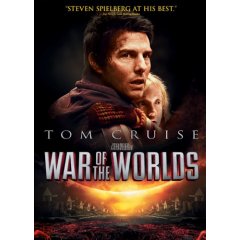
Movie Review: War of the Worlds


Am I the only one that expected at least a decent movie out of Spielberg and Cruise? This was lousy.

It is difficult for me take the time to sit down to a movie. I mean, put down the book, turn off the laptop, turn on the surround sound and actually watch a movie. But what a waste of a Saturday night.

I don't really like Tom Cruise, but if the movie is good enough I can get over it (like Magnolia). Little Dakota Fanning is excellent, so she cancels out Cruise. And then we get dramatic effects and an end-of-the-world scenario--these should count as positives. But I was laughing at it early on, and then by the time we got to the Tim Robbins character, the whole damn thing fell apart.

I never read the HG Wells book, but somebody please tell me it was better than this. So much urging to fight back, fight back, and then during the denouement we find out that **SPOILER** they were never going to survive here any way? Come on.

At least the eye looked a little like the 1955 version.

What ever happened to the short story?

Caught this on Metaxu Cafe:
Condalmo: Short story: the underdog
... Given the much-documented shorter attention span of Americans today, as
compared to pretty much any time in the past, wouldn't it make sense that the
short story form would be the ascendant medium through which people read? Why
are short story collections the awkward little brothers of novels, both on the
review pages and among readers? ...

One might think that we would be more suited today to the brevity of short stories, but who is reading them these days? Writers.

Short stories for writers to create a track record, to justify a publishing house taking a risk on an author. Who is buying the literary journals where these short story writers are publishing? Other writers. It is self-perpetuating and I can't be sorry about that.

What happened to short stores in the mainstream? The New Yorker relies on the bland and predictable (not that they don't occasionally publish a good story; it's just usually by someone we already know) and The Atlantic only publishes fiction once a year now.

The fact is that real readers (those who aren't writers) prefer novels. They want the sort of involvement you can only get from a novel. One reader explained to me this way recently: "I don't get into short stories. When I'm just getting to know a character that's when the story ends.

I would love to see short stories grow in popularity, for the new issue of Black Warrior Review or Florida Review fly off the shelves. But as long as editors, agents, and other writers are reading them, it's okay by me.

Friday, July 28, 2006

Atlantic interview with Francine Prose

The fiction edition of The Atlantic Monthly contains an interview with Francine Prose, and I like her attitude.

You said in that conversation that you became a writer because you were an avid
reader and that you were often perplexed by the fact that some of your students
who wanted to be writers weren’t reading—or weren’t reading passionately.

That hasn’t gotten any better, let me tell you. ... I said, “Have any of you read Crime and Punishment?” Silence. “Have any of you read anything by Dostoevsky?” More silence. And these were graduate students. I don’t quite get it. On a very basic level, I can’t figure out why people would want to write unless they like to read. I mean, what would be the point? For the incredibly glamorous fast track lifestyle? I don’t think so.
...
I’ve noticed that high school students can have a certain resistance to reading if it’s something that’s imposed on them, whereas if they can discover a book on their own, they’re more apt to be passionate about reading and to love the book.

I think it’s partly that teachers are teaching books that they themselves find boring to students who are bored by them. And they’re teaching them in a way that bores the students. It’s just this cycle of boredom that goes on and on and round and round. Whereas reading is the least boring thing you can do. It’s so engaging and it’s so endlessly satisfying, really. The idea of it becoming associated in people’s minds with tedium is kind of tragic.
...
People often make the claim that one of the dangers of the workshop setting is that it produces cookie-cutter stories, and styles that are too similar, or too similar to the
tastes of the instructor. Have you seen this happen? How, as a teacher of writing, do you avoid it?

For one thing, I think that the idea of writing by committee, or learning to write by committee is insanity. It’s just simply insanity. I mean, writing is a
very solitary process. It’s all about being different from everything else—not
the same. So when you’re writing to satisfy the tastes of a group, and
presumably you know those tastes after a while, that’s actually quite dangerous.
One of the things I do when I’m teaching a literature class to MFA students—and
I much prefer teaching a literature class to a writing workshop—is make up a reading list based on masterpieces that would just wither and die in a
workshop setting
.

...
Would you advise a young writer to go to an MFA program or would you say that thoughtful reading is a better way to go?

You make lifelong friendships, and you find people who will be your readers long after you’re out of the workshop—people whose voices and opinions you depend on. But that’s quite different from taking everything that every idiot in your class says seriously.
I could comment in agreement on what she's said here, but I'll let her words stand alone.

Her new book is Reading Like a Writer: A Guide for People Who Love Books and for Those Who Want to Write Them and it's definitely going on my wish list.

Thursday, July 27, 2006

The Angry Reviewer Strikes Again

Now, I wouldn't expect much from Scott Smith's The Ruins, but for Tannenhaus to give the book to Michiko Kakautani to review is just cruel. Maybe she means to be nice, but she pulls no punches:
The problem is these Wicked Plants — who can speak German as well as English,
and who can mimic cellphone ring tones as well as human voices — are so
ludicrous that they undercut all of the suspense Mr. Smith has managed to create
in the well-turned opening sections of the novel. For that matter, they turn
what might have been a gripping summer beach read into a silly, bloody farce.
"A silly bloody farce." Ouch.

I heard an interview with Smith, and I wouldn't be surprised if this sends him over the edge. He doesn't seem to have much self-esteem anyway. Hopefully he'll know enough to see Michiko's byline and skip the review entirely.

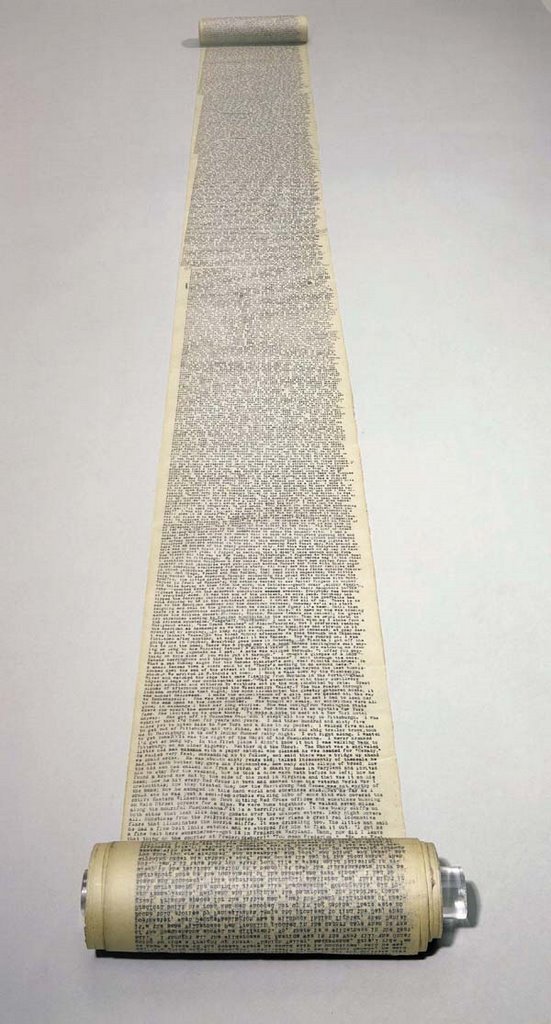
Uncensored 'On the Road' to be published


"Jack Kerouac's 'On the Road' will be published in its unedited original scroll version by Viking Press, which published the Beat Generation classic in September 1957."

If only it was going to be printed in a continuous scroll format. But maybe they can package it with some Benzedrine.

Friday, July 21, 2006

The Business End of Things

I am happy to sit and toil on my writing as much as required, but when it gets around to sending stories out I get filled with anxiety.  I worry about my formatting, about that damn slush pile, about simultaneous submissions, about reading periods, about the appropriateness of the material to the market.  Oh, and then I have to print copies, write tersely written (short) cover letters, and come up the appropriate postage (thanks to the postage meter at work).  And then I have to keep track of what went where, oh and when, being careful not to overload journals in which I'd really love to see my work, making sure to blanket enough of the smaller journals so that maybe someone, somewhere will actually choose to publish one of these things.

I managed to get four stories out this week under this agonizing process.  And I survived.  But I have yet to enjoy this end of things.

Wednesday, July 19, 2006

Book Review: The Sound and the Fury


The Sound and The Fury by William Faulkner

Okay, how on Earth do I try and inject my opinion on this classic? And what if I didn't get much out of it?

I had put this one off for so long simply because I stumbled in those first pages, because of the difficult of Benjy's section. And this time I just plowed through, resorting to sparknotes to straighten out what I read. Quentin's sections were only somewhat more lucid, but I was looking for the motives to his future actions and the only answer I found seemed a little limited. Truthfully, I wasn't happy until I got to the omniscient third person. This is the Faulkner I like, but still it wasn't the Faulkner of If I Forget Thee, Jerusalem. I wanted the long, expansive, descriptive paragraphs. There was plenty of heartbreak here, plenty of tragedy and I was grateful for it.

While I'm happy to tick another classic off my to-read list, I wish I would have taken more away from the experience.

Thursday, July 13, 2006

Voice of a Generation

Can you name the current voice of a generation? Me neither.

I've often wondered what happened to the sort of unifying voices that appeared in previous generations. It seems like you can look in any era and see someone great, someone who became the literary leader for that time. But now we have no one. Or do we? Or was that really the case at all?

Lev Grossman in Time Magazine takes on this issue and makes some great points:
Are we simply living through a downturn, one of those periodic dead spots
wherein the muses take a smoke break? Has the country's artistic talent been
siphoned off by sexier, better-paying media with bigger audiences? (TV has been
suspiciously good lately.) Or could the professionalization of "creative
writing," in the form of scores of M.F.A. programs, actually be retarding the
progress of contemporary literature--hammering eccentric geniuses into
workshop-style conformity, then drowning them out by handing diplomas to their
mediocre peers by the bushel?
Ah, that so often relied upon MFA bashing again. Though, it's hard not to wonder the same thing.
Or maybe there never was such an animal in the first place. The voice of a
generation could just be a convenient fiction, propagated by academics looking
for dissertation topics, publicists looking for publicity and (surely not) book
critics looking for a headline. On some level it has always been an absurdity.
I'm not sure that anybody could say that about a writer at a given point in time. These things require a little historical perspective. Who knows, maybe we'll look back in twenty years and realize that Dan Brown was the Voice of the Generation.

Grossman sums up:
Listen for the singular voice of the current generation, and you'll hear
something else, something different: multiple voices, singing not in unison, but
in harmony.
A bit too rosy for me. He's talking about the variety of ethnic voices, the voices that cross borders, so I can see where he's coming from. Instead, I think we'll look back and see a literary scene as disparate and chaotic as these times.

Bonus -- Booksquare makes fun:
One, define generation. Two, define who needs to be spoken for. Three, find
speaker who crosses cultural, political, ethnic, gender, and whole bunch of
other lines. Four, write book. We have no clue why this is so hard.

Tuesday, July 11, 2006

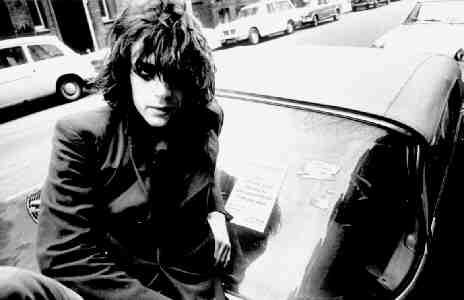
RIP: Syd Barrett


DARK GLOBE
Oh where are you now

pussy willow that smiled on this leaf?
When I was alone you promised the stone from your heart
my head kissed the ground
I was half the way down, treading the sand
please, please, lift a hand
I'm only a person whose arm bands beats
on his hands, hang tall
won't you miss me?
Wouldn't you miss me at all?

The poppy birds way
swing twigs coffee brands around,
brandish her wand with a feathery tongue
my head kissed the ground
I was half the way down, treading the sand
please, please, please lift the hand
I'm only a person with Eskimo chain
I tattooed my brain all the way...
Won't you miss me?
Wouldn't you miss me at all?

Saturday, July 08, 2006

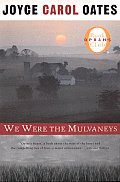
Book Review: We Were the Mulvaneys


We Were the Mulvaneys by Joyce Carol Oates

I haven't been this inspired by a book in a long time. Oates creates such a complete world for her characters, one into which I feel I could easily step. There was a lot to learn from how she lay all of this out for the reader and then placed these intricate and individual people into this scene. It might be, though, that I am hypercritical of novels right now because I'm aiming at composing my own. So many I've read recently seem to fall into trouble in the end. Oates sets things up beautifully and then besets trouble on the Mulvaneys. Things certainly fall apart for them and there doesn't seem much of a way out for them. Indeed, Oates lets them each fall about as far as possible. This nadir happens with only fifty pages left to read. An event reunites the family, and an epilogue shows us them together many years later. The problem: there is no reconciliation. No recounting of the lessons learned. They somehow come out of this darkness with little effort and stumble right into the daylight as the novel closes. I really did enjoy this book, and that's what made the ending so unsatisfying.

Friday, July 07, 2006

Who's Afraid of Novel Writing?

I am.
That MFA diploma certainly doesn't mean that I know anything about writing a novel.  Oh, I've read them, sure.  So many, in fact, that all I have learned is that anything goes.  We have great expectations for the short story, but what do we want out of novels?  Or, I should ask, what will we accept from a novel?  Seems to me that we will accept any format, any premise, and any ending, however implausible, as long as overall the book is well executed.
How, then, can I possibly sit down to start such a thing.  Not just sit down to write, but simply start.  Do I have any idea what I'm doing?  How much do I have to know before I start?  Should I have the whole thing sketched out, or is it okay to just go on an idea?  Given all these questions, do I really want to commit myself to such a thing? 
I am a busy man.  A full time job and a one year old child.  Not as busy I have been, but how much time do I have to devote to writing a novel?  Can I really commit to these characters, this story?  Do I really want to work on a single project for the next year or more?  It takes me months to finish a single twenty page story; at that pace this could take me decades.
Never the less, I am going to do it.  I writing out some character sketches now, and then it's time to begin the pivotal first chapter.  Wish me luck.

Thursday, July 06, 2006

The MFA Diploma

Well, it's here.  Came in the mail last week.  The coveted MFA diploma with my name delicately and proudly displayed upon it.  And how am I to feel?  What am I to do now?
The diploma brings with it a sense of relief, without a doubt.  I did that, went through that workshop process, and it's over.  I'm proud of it because it's an accomplishment.  It required a great deal of work, a huge commitment, and some sacrifices.  Though I know that it doesn't mean anything.  It doesn't say that I'm a better writer, though I feel that I am.  It doesn't really say that I know more than others.  It says I did it, and it's a personal victory, of sorts.
Maybe it would be different if I was planning on really doing something with the degree.  I'm not likely to teach.  I didn't do the GTA thing and that sort of shuts me out from what is a competitive market to begin with.  So, that piece of paper sits on my mantle for now, declaring...something, but I don't really know what.
Maybe it will at least serve as a reminder to keep writing.